A Case for Natural Infrastructure
What Could Dinger Possibly Know About This?
Most people know me as an entrepreneur who cares about conservation and loves the outdoors. That's true, but I've also spent the last several years working hard on my finance chops.
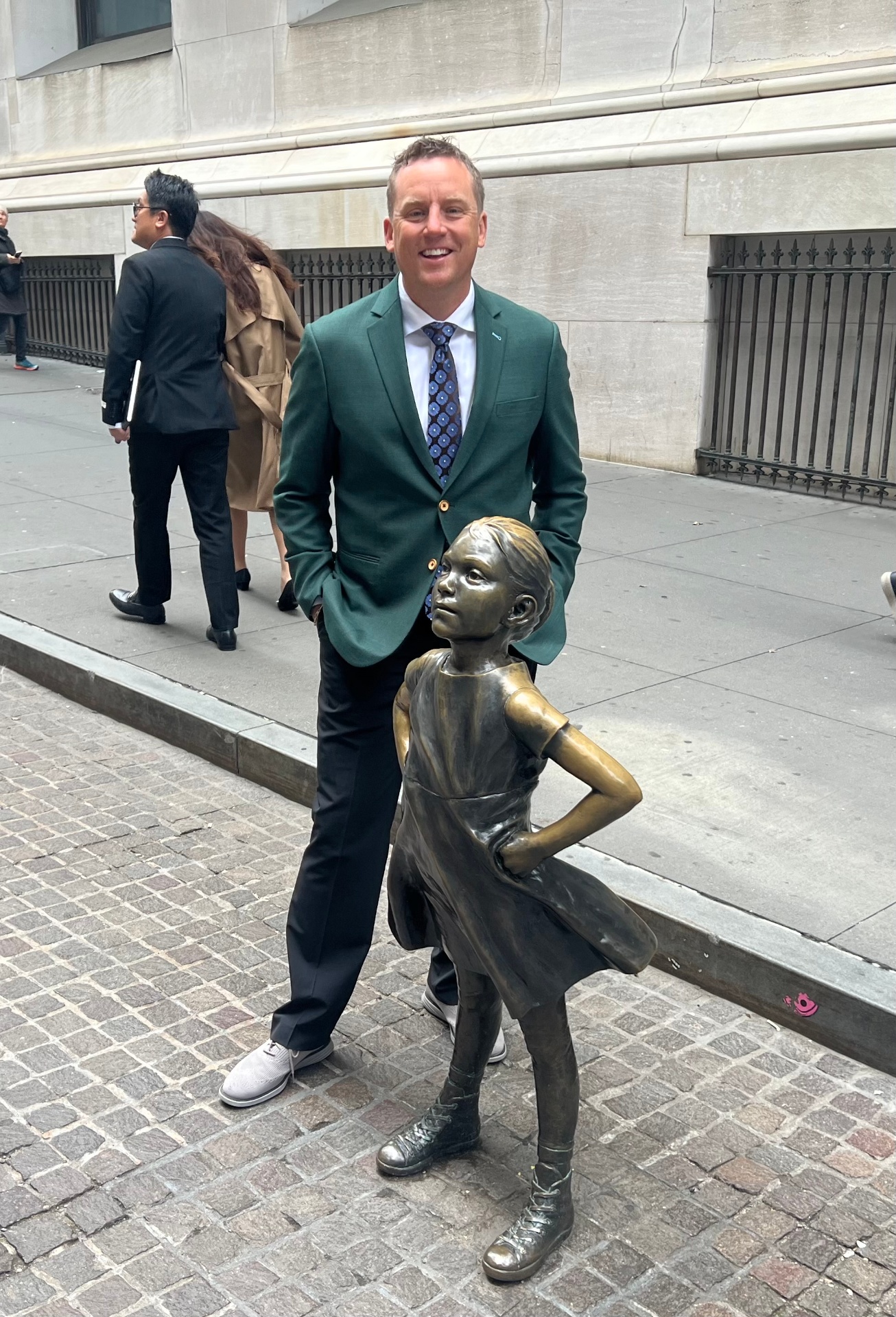
My bona fides are nowhere near "expert" level. But I did join the board of a respected investment bank, testified before the Senate Small Business Committee and rang the bell with the Arbor Day Foundation team at the New York Stock Exchange. I even took a finance class at Harvard. Just one. Ha!
The point is I'm working on it, alright!?
- ●Board Member, Investment Bank
- ●Senate Small Business Committee Testimony
- ●Rang the Bell at the NYSE with Arbor Day Foundation
- ●First-ever OCC-approved lending against carbon credit inventory
Key Insight: I worked with a bank to secure the first-ever approval from the Office of the Comptroller of the Currency (OCC) to lend against carbon credit inventory. It was a six-month lift in which the OCC had to write entirely new regulatory guidance for the banking industry. And, we got the loan!
Despite my shallow attempt above to convince you of my credibility on the topic, no one seeks me out for financial expertise. But I have the gift of simplifying complicated things, and I believe choosing the right language makes all the difference.
I believe if my friends in the conservation and sustainability community adopted the term "Natural Infrastructure" we'd have less explaining to do to would-be funders.
Here's my take:
For decades, solar developers have used a rigorous capital stack to turn a patch of dirt into a yielding energy asset. Meanwhile, many nature-based project developers are forced to piece their work together using every funding source under the sun.
I believe we should stop treating every conservation or sustainability initiative as a one-off project and to achieve this, we need to start referring to it as Natural Infrastructure.
The Solar Playbook & Natural Infrastructure
01The Solar Playbook: A Roadmap for Development
Solar projects are not financed through the goodwill of benevolent actors. They are engineered through a specific financial sequence, leveraging capital fit for the risks in each stage of the process.
02Shifting the Conversation from Costs to Assets
When an internet provider lays fiber or a developer installs a solar array, they are building infrastructure. At Landoption, we believe soil health, water retention, and biodiversity are the natural equivalent.
Pavan Sukhdev, The Economics of Ecosystems and Biodiversity: "We use nature because she is valuable, but we lose nature because she is free."
The offtake in our world is not electricity. It is a carbon credit, a low-carbon input, a water quality incentive, or a biodiversity premium. By framing nature-based work as infrastructure, we shift the conversation from "costs" to "assets."
03The Nature-Based Reality
While a solar panel has a predictable degradation rate, a forest or a cover-cropped field is a living, breathing system. This is where the industry usually hits a wall.
Predictability: Solar is physics. Nature is biology. Nature-based developers now have the technology to provide data-centric "risk intelligence" at every phase of a project. This is what traditional lenders require to move past the biological uncertainty.
The Trust Gap: The current lack of a repeatable capital stack creates a massive trust problem. When funding is sporadic or "experimental," it asks the landowner to take on significant risk. When the "check" depends on a volatile carbon market or a grant that might not exist in two years, landowners often walk away. And their neighbors do too. You cannot build a scalable project on a "maybe." A bankable financial playbook is the way to turn good faith into landscape change.
04The Path Forward
In his book The Third Plate, Dan Barber notes that soil is not just a medium for growing plants but the foundation of our entire social and economic structure. To move that foundation, you need trust. To build trust, you need a financial playbook for Natural Infrastructure.
In my opinion, nature-based project developers and funders must adopt the infrastructure mindset. As the legendary investor Jeremy Grantham points out, the transition to a sustainable economy is the greatest investment opportunity in history. But that opportunity requires a repeatable capital stack.
The Greatest Investment Opportunity in History
"The transition to a sustainable economy is the greatest investment opportunity in history. But that opportunity requires a repeatable capital stack. It's time to stop treating nature as a charity case and start building it as infrastructure."
— Inspired by Jeremy Grantham